Kidney Disease Prevention
Kidney Disease Prevention in India: Screening, Risk Factors & Early Detection
Kidney disease is an increasing public health concern in India. Chronic Kidney Disease (CKD) causes a gradual loss of kidney function and can affect much more than an individual’s health. It can impact quality of life, employment, family well-being and healthcare expenses.
CKD often develops silently, with few noticeable symptoms in its early stages. Early detection, regular screening and healthy lifestyle choices can help identify kidney problems sooner and may slow the progression of kidney disease.
Kidney Disease Prevention in India: Screening, Risk Factors & Early Detection
Kidney disease is an increasing public health concern in India. Chronic Kidney Disease (CKD) causes a gradual loss of kidney function and can affect much more than an individual’s health. It can impact quality of life, employment, family well-being and healthcare expenses.
CKD often develops silently, with few noticeable symptoms in its early stages. Early detection, regular screening and healthy lifestyle choices can help identify kidney problems sooner and may slow the progression of kidney disease.
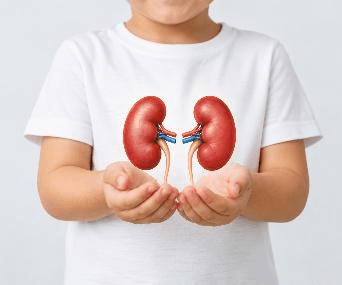
Kidney Disease in India: The Bigger Picture
With imaging tests such as ultrasounds and CT scans, these conditions can often be detected early. In many cases, minor surgical procedures can correct the problem before significant kidney damage occurs — giving your child the best chance for healthy kidney development and long-term well-being.
Chronic Kidney Disease can progress through five stages, from early kidney damage to advanced kidney failure. Common causes include diabetes, high blood pressure, inflammation of the kidneys, hereditary conditions, certain medications and other chronic illnesses.
In the early stages, treatment focuses on identifying and managing the underlying cause, controlling blood pressure and blood sugar, making healthy lifestyle changes and managing complications.
When kidney function is severely reduced, kidney replacement therapy, such as dialysis or kidney transplantation, may be required.
This makes prevention, early detection and timely treatment especially important.
Who Should Be Screened for Kidney Disease?
A high-risk screening approach can help identify people who are more likely to develop kidney disease.
Regular kidney health checks are particularly important for people who:
Have diabetes
Have high blood pressure
Are overweight or obese
Are a smoker/tobacco consumer
Have a family history of kidney disease
Are older adults
Have other medical conditions or take medicines that may affect kidney function
People with diabetes or hypertension should discuss regular kidney health assessments with their doctor. The frequency of testing should be based on individual risk and medical advice.
What Tests Can Detect Kidney Problems?
Simple and accessible tests can provide valuable information about kidney health.
Blood Pressure
High blood pressure can both contribute to kidney damage and develop as a result of kidney disease. Keeping blood pressure under control is an important part of protecting kidney health.
Blood Sugar and HbA1c
Diabetes is one of the major causes of kidney damage. HbA1c is a blood test that provides an estimate of average blood sugar levels over approximately three months.
Serum Creatinine and eGFR
A blood test for serum creatinine can be used to estimate the Glomerular Filtration Rate (eGFR), an important indicator of how well the kidneys are filtering the blood.
Urine Test
A urine test can detect protein, blood and other abnormalities that may indicate kidney damage.
Kidney Ultrasound
An ultrasound may be recommended to assess the size, structure and appearance of the kidneys and to identify certain abnormalities or urinary obstructions.
How Do You Know If You May Have Kidney Disease?
One of the challenges with CKD is that symptoms may not appear until kidney damage has become significant. Some people discover they have kidney disease during a routine health check-up, before surgery or while being evaluated for another health condition.
Possible symptoms may include:
Persistent tiredness or weakness
Loss of appetite
Nausea or vomiting
Swelling of the feet, ankles, hands or face
Changes in urine frequency or volume
Persistent itching
Breathlessness
Anaemia
Unexplained body aches or discomfort
However, the absence of symptoms does not necessarily mean that the kidneys are healthy. People at higher risk should undergo appropriate screening even when they feel well.
How Can You Protect Your Kidneys?
Many kidney problems can be prevented or their progression delayed by addressing important risk factors and adopting healthier habits.
Simple Steps for Better Kidney Health
Kidney Disease in India: The Bigger Picture
With imaging tests such as ultrasounds and CT scans, these conditions can often be detected early. In many cases, minor surgical procedures can correct the problem before significant kidney damage occurs — giving your child the best chance for healthy kidney development and long-term well-being.
Chronic Kidney Disease can progress through five stages, from early kidney damage to advanced kidney failure. Common causes include diabetes, high blood pressure, inflammation of the kidneys, hereditary conditions, certain medications and other chronic illnesses.
In the early stages, treatment focuses on identifying and managing the underlying cause, controlling blood pressure and blood sugar, making healthy lifestyle changes and managing complications.
When kidney function is severely reduced, kidney replacement therapy, such as dialysis or kidney transplantation, may be required.
This makes prevention, early detection and timely treatment especially important.
Who Should Be Screened for Kidney Disease?
A high-risk screening approach can help identify people who are more likely to develop kidney disease.
Regular kidney health checks are particularly important for people who:
Have diabetes
Have high blood pressure
Are overweight or obese
Are a smoker/tobacco consumer
Have a family history of kidney disease
Are older adults
Have other medical conditions or take medicines that may affect kidney function
People with diabetes or hypertension should discuss regular kidney health assessments with their doctor. The frequency of testing should be based on individual risk and medical advice.
What Tests Can Detect Kidney Problems?
Simple and accessible tests can provide valuable information about kidney health.
Blood Pressure
High blood pressure can both contribute to kidney damage and develop as a result of kidney disease. Keeping blood pressure under control is an important part of protecting kidney health.
Blood Sugar and HbA1c
Diabetes is one of the major causes of kidney damage. HbA1c is a blood test that provides an estimate of average blood sugar levels over approximately three months.
Serum Creatinine and eGFR
A blood test for serum creatinine can be used to estimate the Glomerular Filtration Rate (eGFR), an important indicator of how well the kidneys are filtering the blood.
Urine Test
A urine test can detect protein, blood and other abnormalities that may indicate kidney damage.
Kidney Ultrasound
An ultrasound may be recommended to assess the size, structure and appearance of the kidneys and to identify certain abnormalities or urinary obstructions.
How Do You Know If You May Have Kidney Disease?
One of the challenges with CKD is that symptoms may not appear until kidney damage has become significant. Some people discover they have kidney disease during a routine health check-up, before surgery or while being evaluated for another health condition.
Possible symptoms may include:
Persistent tiredness or weakness
Loss of appetite
Nausea or vomiting
Swelling of the feet, ankles, hands or face
Changes in urine frequency or volume
Persistent itching
Breathlessness
Anaemia
Unexplained body aches or discomfort
However, the absence of symptoms does not necessarily mean that the kidneys are healthy. People at higher risk should undergo appropriate screening even when they feel well.
How Can You Protect Your Kidneys?
Many kidney problems can be prevented or their progression delayed by addressing important risk factors and adopting healthier habits.
Simple Steps for Better Kidney Health
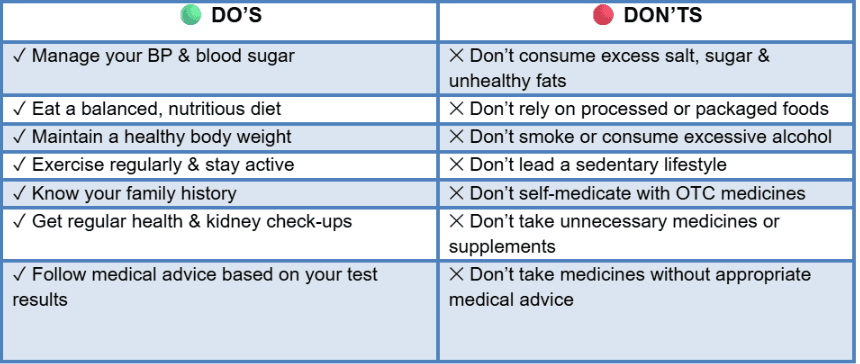
Indian food is largely with excessive salt - pickles and papads. High dependence on processed and packaged food will put the population at risk. Reducing excess salt can support both blood pressure and kidney health.

KWF’s Focus on Kidney Disease Prevention
Recognising the growing importance of kidney disease prevention, KWF has been focusing on awareness, preventive measures and early detection.
The incidence of kidney disease has been steadily rising. According to studies, young people are being affected more than ever, which raises a huge concern among global kidney communities. In our efforts to take corrective steps to check prevalence of the disease, KWF decided to focus work around ‘Preventive Measures’ in 2021. We conducted a Patient Advocacy Webinar on high salt, sugar and fat content in Ultra Processed Foods.
In March 2023, we explored a new approach to address this mammoth disease that has shaken many homes with a CKD patient. The country needs to plan better to handle this public health concern, and the world needs to respond to the ‘call of the hour”.
Why are Preventive Measures growing in significance?
We gathered alarming information from authentic research studies, and together with our personal experiences with CKD, we worked with the best considered decision.
Chronic Kidney Disease data:
“CKD is increasing in prevalence – and at an alarming rate. CKD deaths increased by 41.5% from 1990 to 2020, rising from the 17th leading cause of death to the 10th. Now, it is expected that CKD will climb to the fifth leading cause of death globally by the year 2040.”
https://ncdalliance.org/why-ncds/ncds/chronic-kidney-disease
Hypertension:
Of the estimated 220 million people in India living with hypertension, only 12% have their blood pressure under control https://www.who.int/india/news/detail/02-06-2022-india-hypertension-control-initiative--a-high-impact-and-low-cost-solution
Diabetes:
The burden of diabetes is high and increasing globally, and, in developing economies like India, is mainly fuelled by the increasing prevalence of obesity and unhealthy lifestyles. The available data in 2019 showed that 77 million individuals had diabetes in India, which is estimated to rise to over 134 million by 2045. https://www.ncbi.nlm.nih.gov/pmc/articles/PMC8725109/
Since 2021, KWF began focusing on preventive measures and conducted a Patient Advocacy Webinar highlighting the high salt, sugar and fat content of ultra-processed foods and their potential impact on health.
KWF has also worked towards bringing healthcare professionals and communities together to improve awareness of kidney disease and its connection with conditions such as diabetes and hypertension.
Screening for Kidney Health
KWF’s Focus on Kidney Disease Prevention
Recognising the growing importance of kidney disease prevention, KWF has been focusing on awareness, preventive measures and early detection.
The incidence of kidney disease has been steadily rising. According to studies, young people are being affected more than ever, which raises a huge concern among global kidney communities. In our efforts to take corrective steps to check prevalence of the disease, KWF decided to focus work around ‘Preventive Measures’ in 2021. We conducted a Patient Advocacy Webinar on high salt, sugar and fat content in Ultra Processed Foods.
In March 2023, we explored a new approach to address this mammoth disease that has shaken many homes with a CKD patient. The country needs to plan better to handle this public health concern, and the world needs to respond to the ‘call of the hour”.
Why are Preventive Measures growing in significance?
We gathered alarming information from authentic research studies, and together with our personal experiences with CKD, we worked with the best considered decision.
Chronic Kidney Disease data:
“CKD is increasing in prevalence – and at an alarming rate. CKD deaths increased by 41.5% from 1990 to 2020, rising from the 17th leading cause of death to the 10th. Now, it is expected that CKD will climb to the fifth leading cause of death globally by the year 2040.”
https://ncdalliance.org/why-ncds/ncds/chronic-kidney-disease
Hypertension:
Of the estimated 220 million people in India living with hypertension, only 12% have their blood pressure under control https://www.who.int/india/news/detail/02-06-2022-india-hypertension-control-initiative--a-high-impact-and-low-cost-solution
Diabetes:
The burden of diabetes is high and increasing globally, and, in developing economies like India, is mainly fuelled by the increasing prevalence of obesity and unhealthy lifestyles. The available data in 2019 showed that 77 million individuals had diabetes in India, which is estimated to rise to over 134 million by 2045. https://www.ncbi.nlm.nih.gov/pmc/articles/PMC8725109/
Since 2021, KWF began focusing on preventive measures and conducted a Patient Advocacy Webinar highlighting the high salt, sugar and fat content of ultra-processed foods and their potential impact on health.
KWF has also worked towards bringing healthcare professionals and communities together to improve awareness of kidney disease and its connection with conditions such as diabetes and hypertension.
Screening for Kidney Health

Simple health checks can help identify people who may be at risk of kidney disease.
These may include:
Blood pressure measurement
Blood sugar and HbA1c
Urine testing for protein
Kidney function tests, including serum creatinine and eGFR
Kidney ultrasound or other imaging when recommended by a doctor
For people with diabetes or high blood pressure, regular kidney assessment should form part of routine healthcare, with the timing and frequency of testing determined by their doctor.
Prevention Starts With Awareness
Kidney disease does not always announce itself in its early stages. By understanding the risk factors, knowing your blood pressure and blood sugar levels, undergoing appropriate kidney screening and adopting healthier habits, we can take action before significant kidney damage occurs.
Protect your kidneys. Know your risks. Get screened. Act early.
Simple health checks can help identify people who may be at risk of kidney disease.
These may include:
Blood pressure measurement
Blood sugar and HbA1c
Urine testing for protein
Kidney function tests, including serum creatinine and eGFR
Kidney ultrasound or other imaging when recommended by a doctor
For people with diabetes or high blood pressure, regular kidney assessment should form part of routine healthcare, with the timing and frequency of testing determined by their doctor.
Prevention Starts With Awareness
Kidney disease does not always announce itself in its early stages. By understanding the risk factors, knowing your blood pressure and blood sugar levels, undergoing appropriate kidney screening and adopting healthier habits, we can take action before significant kidney damage occurs.
Protect your kidneys. Know your risks. Get screened. Act early.