Organ Donation: The Gift of Life and a Second Chance at Living
KWF

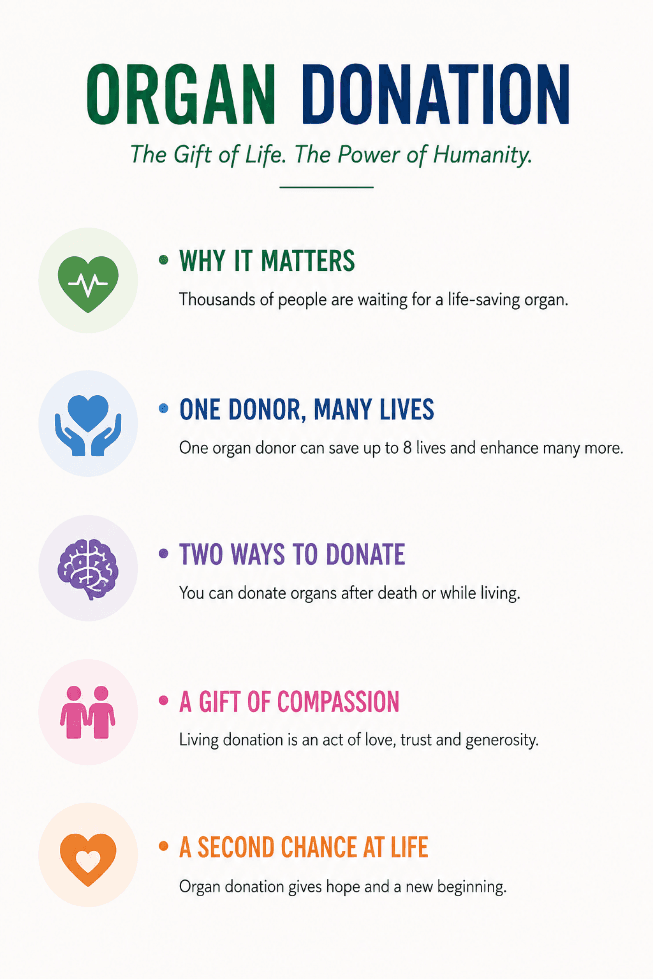
A human organ becomes invaluable when a person experiences organ failure. For someone facing kidney failure, the diagnosis can be overwhelming, frightening, and life-altering. The emotional response often includes fear, uncertainty, and questions about survival. Yet, in the midst of this crisis, organ donation stands as one of humanity’s greatest gifts, offering hope, renewed health, and a second chance at life.
Organ donation has become a remarkable milestone in modern medicine and remains an essential component of healthcare systems across the world. Unlike many medical treatments, organs cannot be manufactured or purchased. They can only be donated by another human being. Deceased organ donation takes place only after a person has been declared brain dead through a rigorous medical process conducted by authorized medical experts in accordance with established legal and ethical guidelines.
Equally inspiring are the stories of living organ donors. Many kidney transplants are made possible through the generosity of family members and loved ones who choose to donate a kidney to save another person’s life. Each donor has a unique story and a deeply personal reason for making this extraordinary decision. Their actions reflect compassion, courage, and a commitment to the well-being of another human being.
By understanding these journeys—both of recipients and donors—we can develop greater awareness, appreciation, and support for organ donation. Every donated organ represents not only a medical procedure but also an act of humanity that transforms lives, strengthens families, and demonstrates the profound impact one person can have on another.
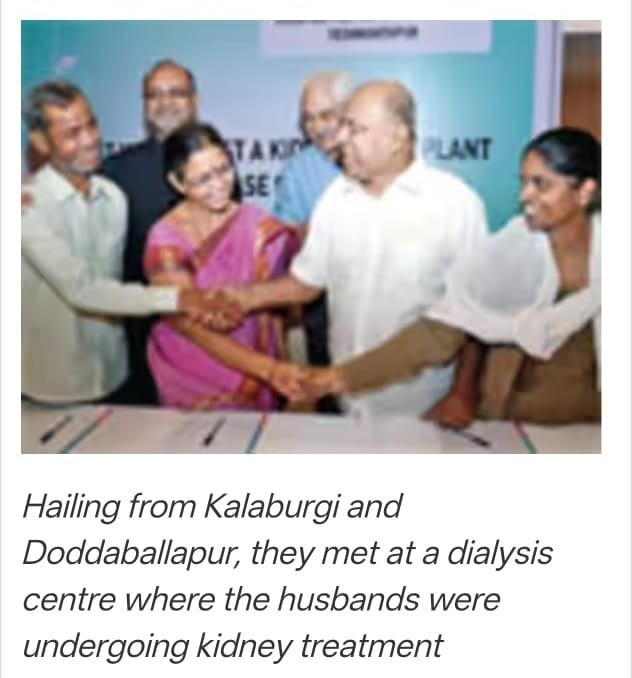
Swap kidney transplantation (also called paired kidney exchange) offers hope when a willing donor is medically incompatible with their intended recipient. In this procedure, two or more donor-recipient pairs are matched so that each recipient receives a compatible kidney from another family's donor. A remarkable example was reported in Bengaluru, where K. G. Ramesh and B. R. Krishnamurthy, both suffering from end-stage kidney disease, received life-saving transplants after their wives, Anuradha Ramesh and Savitri Krishnamurthy, exchanged kidneys because they were compatible with each other's husbands. The successful swap transplant gave both patients a second chance at life and demonstrated how collaboration and medical innovation can overcome biological incompatibility.
Watch some of our Transplant stories here and get motivated
A human organ becomes invaluable when a person experiences organ failure. For someone facing kidney failure, the diagnosis can be overwhelming, frightening, and life-altering. The emotional response often includes fear, uncertainty, and questions about survival. Yet, in the midst of this crisis, organ donation stands as one of humanity’s greatest gifts, offering hope, renewed health, and a second chance at life.
Organ donation has become a remarkable milestone in modern medicine and remains an essential component of healthcare systems across the world. Unlike many medical treatments, organs cannot be manufactured or purchased. They can only be donated by another human being. Deceased organ donation takes place only after a person has been declared brain dead through a rigorous medical process conducted by authorized medical experts in accordance with established legal and ethical guidelines.
Equally inspiring are the stories of living organ donors. Many kidney transplants are made possible through the generosity of family members and loved ones who choose to donate a kidney to save another person’s life. Each donor has a unique story and a deeply personal reason for making this extraordinary decision. Their actions reflect compassion, courage, and a commitment to the well-being of another human being.
By understanding these journeys—both of recipients and donors—we can develop greater awareness, appreciation, and support for organ donation. Every donated organ represents not only a medical procedure but also an act of humanity that transforms lives, strengthens families, and demonstrates the profound impact one person can have on another.
Swap kidney transplantation (also called paired kidney exchange) offers hope when a willing donor is medically incompatible with their intended recipient. In this procedure, two or more donor-recipient pairs are matched so that each recipient receives a compatible kidney from another family's donor. A remarkable example was reported in Bengaluru, where K. G. Ramesh and B. R. Krishnamurthy, both suffering from end-stage kidney disease, received life-saving transplants after their wives, Anuradha Ramesh and Savitri Krishnamurthy, exchanged kidneys because they were compatible with each other's husbands. The successful swap transplant gave both patients a second chance at life and demonstrated how collaboration and medical innovation can overcome biological incompatibility.
Watch some of our Transplant stories here and get motivated


