Brain Death: Understanding the Process
KWF

Brain Death: Understanding the Process
Introduction:
Informing a family that their loved one is brain dead is one of the most difficult and emotional tasks for healthcare professionals. It can be confusing for families because the ventilator keeps the heart beating even though the person will never regain consciousness or breathe independently.
During this time, families need to make important decisions about continuing ventilator support and the possibility of organ or tissue donation. It is important for them to understand that the individual is brain dead, and removing the ventilator does not cause death.
What Is Brain Death
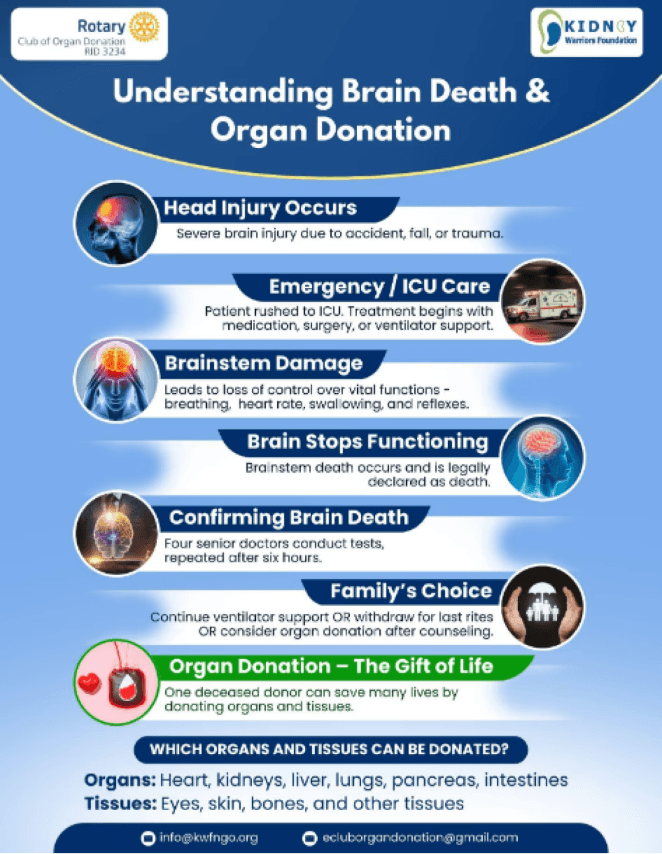
In India, brain death is defined under the Transplantation of Human Organs and Tissues Act (1994) as the “stage at which all functions of the brainstem have permanently and irreversibly ceased”.
The brainstem connects the brain to the spinal cord and controls vital activities such as breathing, heart rate, and blood pressure.
Common causes for brain death include severe head injuries, stroke, cardiac arrest leading to lack of oxygen to the brain, infections, hemorrhage, or drug overdose.
Once brain death occurs, although machines can keep the heart beating for a short time, there is no chance of recovery due to the permanent loss of vital functions, and the person is considered clinically and legally dead.
Who Declares Brain Death:
A set of 4 doctors from the hospital’s empanelled Committee are authorized to declare brain death after performing certain tests.
The panel includes:
• the doctor in charge of the hospital
• a doctor nominated from a panel by the appropriate authority
• a neurologist or neurosurgeon
• the treating doctor
The tests are to be repeated after a minimum interval of six hours to be certain that brain death has occurred. If brain death is confirmed after both these tests, the family is informed.
The ventilator continues to keep blood circulating through artificial respiration, which can help preserve the person’s organs if the family wishes to consider organ donation.
Counsellors guide the family and coordinate with authorities based on the information shared by the family.
Call MOHAN Foundation’s 24x7 Helpline: 1800 103 7100, or government agencies such as NOTTO / ROTTO / SOTTO and other NGOs working in this field within 1–2 hours of death.
The hospital informs the state level nodal agency (ZZTCC, SOTTO, etc. based on the state).
Allocation of organ is done by the nodal agency that maintains a waiting list of patients waiting to receive organs.
Allocation is done as per the law, based on blood/tissue match, medical urgency and wait list priority.


